Friday, February 22, 2013

Ice Weather

I paddle a good long distance, all the way to the upper piece of Gulf Pond before I stop to write.  I put in down in front of the house, launching from the talus that forms the bottom of the sea wall, a project that was more clunky and clumsier than I expected.  The wind is out of the north or east and so the land protects me from some of it and the rest is a very light following breeze.  The foot high waves are more than the wind predicts, it is just that in that direction there is little out there until one gets to Europe.

I found some buffleheads in the salt water today.  I figure that the cold weather must be icing up the protected brackish waters where I usually find them.  Short spells of cold doesn't usually affect wintering birds behavior, unless that cold brings snow or ice, which is what are recent weather has done.  It's the phase shift that gets you.

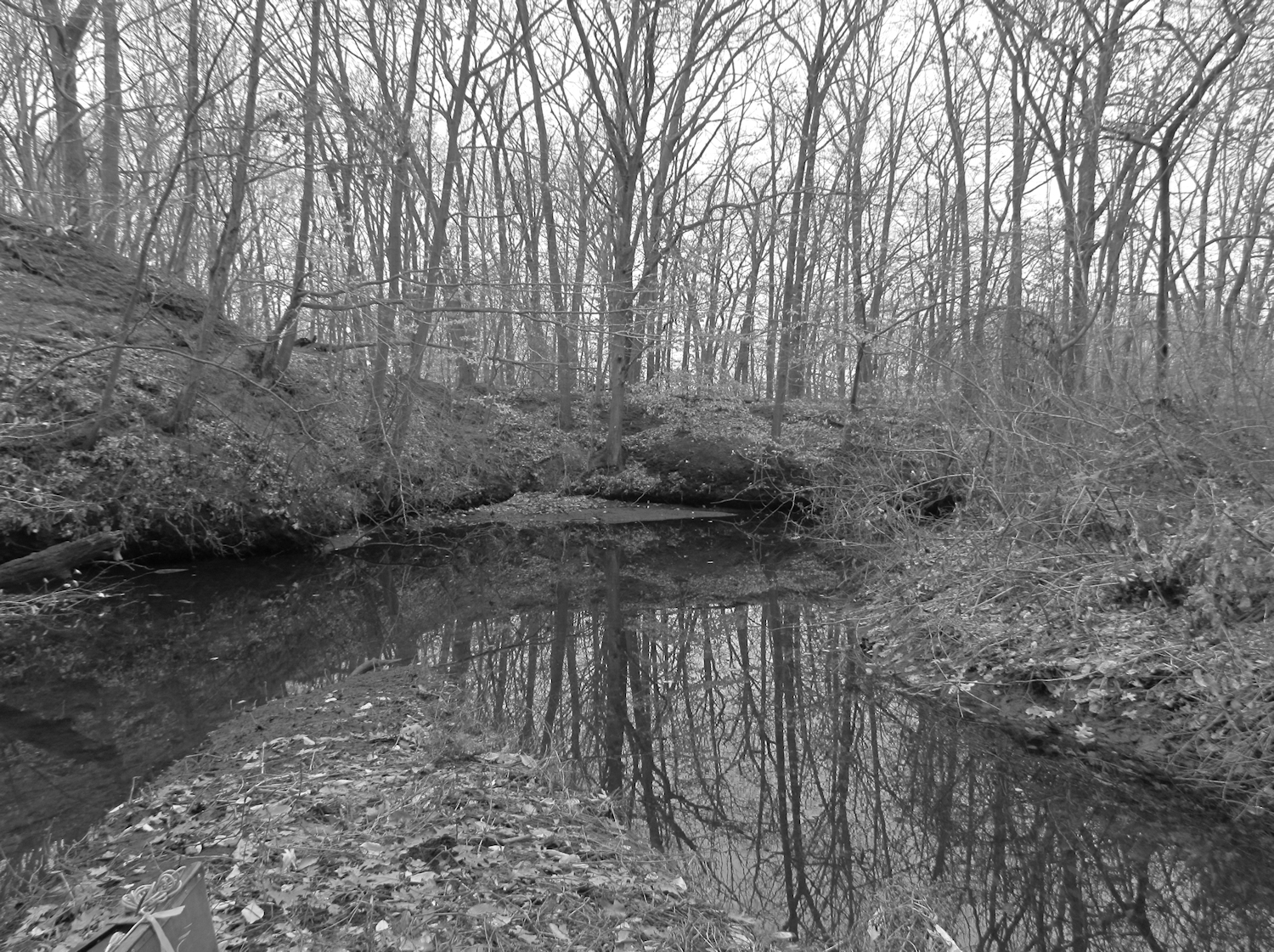
I paddle up to the mouth of Calf Pen Creek and discover that I can enter it at this almost high tide level.  It is a narrow creek running through a wetland and separated from the ocean by a road that is lined with houses that have survived, to varying degrees, this fall's hurricane.  I find each meander choked with thin ice that the canoe breaks through with differing amounts of effort.  But, before I get to the second bridge, a half mile in, the ice finally does stop me.  It is an inch thick and with the twice daily flooding and ebbing the ice has broken into sheets with 2 or 3 layers of inch thick ice stacked on top of each other.  I turn back and continue.

Calf Pen Creek


There is a red-throated loon feeding in the ebb current at the mouth of Gulf Pond.  There usually is.

If you blow it up real big it looks just like the Loch Ness monster

A mute swan sits in the marsh grass on the east shore of the pond.
There are no osprey nor will there be for the next few months.

Milford, Est. 1639


I head up  to the Indian River, but passage through the old stone railroad bridge is always tide dependent, unless one is willing to wade, and I am not willing in 30 degree weather.

I head into one of the side channels to a possible take out spot.  This is a new portage route for me, and with the mid level tide, I can coast through thin ice right up to the road. 

I return home on the Pond Point Portage.

Friday, February 15, 2013

It is a day to just be birds

Sometimes, my thoughts come only after a thousand or a hundred strokes of the paddle.  Sometimes, they come when I do the portage from the house to the water.  Today, I brought the thoughts with me from home and the paddling did its work on them.


The father of a friend died yesterday.  He was an artist as I am, but we never met.  My friend was with his father on his last days and he photographed his tools and shared the photos, photos of paints and a paint box, of screwdrivers and socket wrenches.  If one didn't know better, one might call it a collection of tools, but makers, whether they are artists or machinists or carpenters or potters or weavers, do not have collections of tools.  They have tools.  The images were not of the neatly peg boarded tools of the home handy man or the clean, ordered and oiled precision of the machinist.  They were jumbles and clutter with only a loose categorizing that made it clear that they were not ignored discards.  These were tools used, not tools collected.  I saw importance in those images.  The hands of the craftsman extend from the very core of the being, and while we can't always decipher that hand to soul connection, the tools of the craftsman can give a good hint at what lies within.  I could see the creative spirit in the semi-organized clutter of the tools and paints.  It was the creative side speaking out about how rummaging around a bit for the right tool has creative value.  Even the simple handling and shifting of the wrong items as one seeks the correct tool is of some unmeasurable value.  It might not be efficient, but it always gives time for thought, it always opens the possibilities of a different direction.  The photos said, "artist".


And then, I find myself at Gulf Pond.  The thoughts have buried the distance.  I have not been here since we moved into the house.  It has been a good day for birds and Gulf Pond, a salt water marsh of clam and oyster beds, brings a change in species.  Here are the buffleheads, Canada geese, and great blue herons that I don't see at the house.  It has been a good day for birds and I have seen the usuals and, in the case of the long-tailed ducks, heard those that I haven't seen.  Today, I take no tally.  It is their day to not be a count, but rather to just be birds.

The act of seeking, whether things are found or not, leads to somewhere.


Wednesday, February 13, 2013

Home

A long stretch of dry land comes to an end.  I portage the canoe on my shoulders from our new home on the east coast down the hill to the water.  Three feet of snow fell not too many days ago - it is a winter scene although the air is warming to 40 degrees under a nearly clear sky.  My neighbor, who is out walking her dog, sees me preparing the canoe in the snowbank that was our driveway, "Now, you are fantasizing," she says.  I reply, "no, I am going."

The walk is easy, except for the last bit, a 40 foot stairs down the seawall, a stairs that is knee deep in snow.  But, canoes slide well on snow and I just lower it with the stern line while walking behind.  A loon wails.  It is the call of a common loon, a bird of my Minnesota youth.  I translate it into "welcome back, where were you?"   It seems odd to me that on the very first day that I put my canoe in from our new home, such a bird should come to greet me.

I head up the coast in waters I've not yet seen.  When I near the rocky point a mile up I spot a long tailed duck (formerly called and "old squaw").  It is silhouetted by the sun, but there is no mistaking it.


As I continue, edging along the rocks, I find a sandpiper that I do not know.  It has a very pointed bill with yellow at the base...an unusual feature for something like a sandpiper.  I find a few more of them.

Purple Sandpipers


In Seattle, I called days like this "tennis ball days" because they were calm enough that I could spot a tennis ball (non-biodegradable dog toys - I guess people think that stuff they throw in the water just goes away) from a 1/4 mile or more.  But, there are no tennis balls out here today.  Instead, it is bird calls.  Bird sounds are traveling unimpeded over unusually long distances.  There is a nasally "uh-uha-uh"...starting with a low note, peaking with the "a" and returning to the low note.  I've not heard it before.  I track it to a small flock of ducks that turn out to be long-tails calling back and forth. I see several horned grebes.

The put-in.  The take-out.

I head down the coast, past my put in, to the next point so that I can see the layout of the next cove, which has a creek that drains a large marsh that will be a future trip.

Thursday, December 13, 2012

Hi, it's your mom

It is a sunny day that had a night temperature that just touched freezing.  My local waters, the ones that I can portage to from the house, are all tidal and with short winter days, timing my trips with the tides is necessary if I am to get into some of my newly explored environs.

I linger a bit too long over my morning coffee so that when I do put my canoe in at the head of the harbor, I have to paddle without pause.  For most of the thousand yards or so that it takes to get to the edge of the ocean I paddle directly into the winter sun, a searing white reflecting streak in the water making a joke of my dark sunglasses.  I have three bridges to pass under and I have to beat the "high" high tide that is coming or else there won't be enough headroom to pass under them.  The rusty bridge goes easy, the flooding current carrying me through while I lay my chest flat on the middle thwart.  I clear the beams by several good inches.  I cross straight up lower Gulf Pond and pass under the second bridge, laying on the middle thwart again and clearing by a few inches.  The third bridge, at the head of Gulf Pond looks too low from a distance, but looks better as I near.  But, it is a tight fit and I clear it by just an inch.  I will be on this side of that bridge for the next 3 hours or so, unless I portage around.

the fifth bridge

Then, I ride a fast chute of waves under the high stone bridge (the fourth) into the Indian River.  I put down the paddle to write.  My cell phone rings from inside the drybag clipped to the front thwart.  It is my mom.  I don't make a habit of using phones when I am outside - I did not own a cell until just 6 months ago, but having never convinced my mom to get into a canoe with me, I find something very enjoyable and novel about talking with her from the canoe, from the river, with nothing but marsh surrounding me.

Indian River

I ride the tidal current upstream until I get to the sixth bridge, which I never think much about.  The current here is always light, otherwise I would think about it.  I have to lay down inside the canoe to slip under this one, the highest points of the canoe clearing by just two inches.  Then, I enjoy the depth of this narrow calm river all the way up to the Clark Fishway, where logjams and a dam bar my path unless I was to make the effort to portage.  I see two cardinals with their brilliant red popping out from the bare trees.

cardinal
As I return, the kids at the daycare center that I usually sneak by in silence come over to the fence and greet me.  I wave, they wave, as I paddle off I hear a tiny voice holler, "have a beautiful weekend".


nest

The sixth bridge comes up and I am about 4 inches too high to fit under.  So, I spend the next hour and a half or two, pacing the river, paddling up and back, weaving in and out of tree branches, basking in the sun, looking for nests and watching birds until the tide falls far enough so that I can once again lay in the bottom of the canoe and slip under the bridge.


I return the way I came.


red breasted merganser

Friday, December 7, 2012

When the sky and ocean are one

The day is flat, a level and even overhead of clouds that runs to all horizons and joins seamlessly where it meets the ocean, so seamlessly in calm air that one can not see where the sky ends and the water begins.


I find the red-throated loon at the head of the harbor not far from where the fresh water enters from the Wepawaug River.  But on this day, I walk past the bird on my portage to where I put in.  There is an eighth inch sheet of ice in the quiet places in the harbor where the water is recharged with fresh water from the river. 

I am heading for the feral cat park, which is a near half day trip from here.  It is a good trip to take when the air is so still.  The tide is low and dropping and when I turn the point at the mouth of the harbor, I head west aiming for the midpoint of the bar that joins the land with Charles Island.  I may have to portage ten feet or so when I get there...a fair exchange for the longer route out and around the island.  The low tide can create some lengthy detours as it exposes sand bars and groins along the shore, but when I get to the river I should have some of the flood current pushing me along.

The clammers are working their allotments in the near waters.


When I get to the bar, I coast over it at a low spot on just 4 inches of water, and then I continue paddling. 

greater scaups - a flock of 500+

A half mile from the bar, there is a very large flock of ducks.  I photograph them several times as I close distance on them as I would like to identify the species.  They are skittish.  These ducks are migrating.  Still 200 yards away, they scare splitting the flock in half as they take off.  It is 500 ducks or more.  As I watch them head south out over Long Island Sound, the two halves join.  Their flight away is not casual and it is not to get distance on me.  They are Greater Scaups and they are going somewhere.  I think about how large flocks of birds were once common and not something to be overly impressed with.  I am impressed.


I have paddled this route once before during a falling tide that was higher than today's water.  The sandbar at the mouth of the big river is many times larger than it was on my last trip although in the flat light and overcast, it is difficult to see the extent of it until one gets very close.  I find that I cannot shortcut the jetty like I did last time and I make a long detour out and around the wall of rock.  A portage would've been faster, but it would have left me with cold wet feet on a cold wet day.

I spot a common loon in the river.

It begins to rain, and it rains all of the way up the river.  It is a fine day to have to oneself.

Monday, December 3, 2012

Let things happen

It is a day too fine to not be out.  The air is clear of all of yesterday's fog and with the low winter sun, the light over the marsh casts arctic contrasts on everything it can touch.  I am aimless today and without a need to go in any particular direction.  I end up in the Indian River for awhile where I just sit and wait for things to happen.  I spend my time just looking at it.


And, the red-throated loon is where I usually see the red-throated loon.

Sunday, December 2, 2012

The Red Throated Loon Waits

The red-throated loon is waiting at the mouth of the harbor as it often does when the tide is flooding into Gulf Pond. It does not approve of my arrival and flies off seaward out through the two stone jetties, its white underside showing me from some distance what bird it happens to be.

But, it is not yet high tide and I have an appointment to keep, so I turn straight away into Gulf Pond turning my back on calm seas and a thin fog that doesn't hide Charles Island, which is 2000 yards distant.  The current sends me under the rusty bridge with ease and my rate continues to be faster than I expect as I continue up the middle of the pond.  This could be tide, but I suspect it might be my schedule-to-keep in the back of my mind.

I arrive at the stone bridge having seen a few dozen buffleheads, a kingfisher, a great blue heron and several black ducks.  I have arrived before high tide and I ride a fast current with foot high riffles down a six inch drop into the Indian River.  The flow is upstream, but for how far I don't know.

At the highway bridge where I spotted the raccoon a couple days back, I stop to inspect the muddy shelves on either side of the underpass.  Not only are raccoon tracks present, but on both sides there are fresh deer prints.

I continue up to the log jam where I have always turned back.  I think I can go farther, but would rather wait for when I have my rubber boots.  I notice that I happen to be where the downstream flow is meeting the upstream tide.

Before I get back to the stone bridge, I turn into one of the little openings that branch off of the river.  It is ten to fifteen feet wide and goes much further than I expected.  It is a constant meander, a tight bending left and then right through low grasses and leafless hedges.  It takes me right up to a cooper's hawk, which takes flight as I approach.  I have hit the end of the road and turn back.


I go back over my route with little change from when I came except that the fog has come in.  I can still see the length of half the pond, but at the harbor entrance Charles Island is no longer there.