Monday, August 20, 2018

Atomic Canal


Rather than heading straight away up Salmon Cove, I rounded the point and went up the Connecticut River.  I'd not been out on this side of the long spit, actually a cedar swamp that separates the cove from the river, so I felt it worth the time.  For a good fraction of a mile the shore was lined with a bed of wild rice that was about 2 canoe lengths in width. Not long after that I came to the man-made canal that I have named Atomic Canal.  This was the cooling water outflow from a nuclear power plant that has been very well erased from the landscape.  I haven't been to this spot in a few years and then it had a barrier boom stretched across it to prevent any access.  Now, it is open with only a few warning signs that you are not to set foot on the banks.  I've done my research on this area and know that the spent fuel rods are stored somewhere up on the hill.  On the good side, this large area is now a no entry wildlife refuge.
Cormorants
The canal is longer than I supposed, perhaps a half mile.  It's either forested or brushy with a road running near the bank for about half its length.  It does have some nice patches of wild flowers that have attracted some large deep red butterflies.  I also spot a few Great Blue Herons and a couple Kingfishers.  I turn at the rather industrial, or formerly industrial dead end and head back to something a bit more natural.


I cross the river and find a strong current on the far side.  Then, I cross back over and head up Salmon Cove.  I knew of three Osprey nests at the bottom of the cove.  Two of them were blown away during an early summer windstorm, unfortunately when the Osprey chicks were quite incapable of flying.  Two new nests were built afterwards, and although I can't be sure, I figure that it was the same pairs that had lost their nests.  They did not, however, reuse the original sites.  One is across the water from the old spot, and the other is near the point where the cove opens up.  In both cases these nests appear somewhat unfinished.  They are small and the branches are less dense - somewhat airy compared to a nest where eggs are being tended.  I'll see next year, but the nests almost appear to be territorial place markers more than anything.
One of the new Osprey nests
I head up the cove and into the Moodus River.  It is a narrow river with trees overhanging in most places.  With the cloudy skies, it closes in and gets quiet and moody.  I find some almost ripe grapes growing on the banks and a rudimentary beaver dam that is easy to pass.  I turn back at the shallows where I would have to wade and head out.
Dark clouds are moving in and the sky is becoming dramatic.

Saturday, August 18, 2018

The Bittern of Lord's Cove

I put out from Pilgrim's Landing with no more thought to the plan than I am tired of driving and this is a good place to start.  It is warm, humid, overcast and raining lightly with large sparse drops that feel much better on the skin than the alternative sweat. 
I head up into the farthest reaches of Lord's Cove with little to note other than that there are a good number of Great Egrets about, a few Great Blue Herons, and a couple of Osprey that fly past.  The Osprey nests are empty, the young being strong enough to be out perching in trees without being watched over by the adults.

While rounding the geographic oddity of Coute's Hole, a round pond sized opening in the marsh that can be seen in satellite photos and old maps, I notice a bent piece of driftwood.  Shore birds often look like bent pieces of driftwood and the bend on this one moves.  It is a American Bittern, a rare enough sighting to be a bit proud of.  The Bittern assumes the Bittern pose - bill tipped up towards the sky.  This lines up the buff striping on the body so that the bird blends in with the cattails and wild rice surrounding it.  I pass by on the opposite shore of the channel and it never moves.
American Bittern
I continue deeper in, paddling up into the third cove where there is a well established Eagle nest.  At different times, two immature Bald Eagles fly by and over the ridge to other places in Lord's Cove.  They both look large, well fed and healthy.  As I drift with the wind, I hear something moving in the cattails.  I sit still, paddle down, not moving.  Soon, the wind has blown me downwind of whatever is back there unseen in the cattails.  Every thirty seconds or so I pick up the sound of it moving.  Finally, it snorts several times, and it is clearly moving away towards firmer ground.  I'm pretty sure it was a deer.
wild rice

With that, I begin my return, following the east shore closely.  There is little more to add other than spotting some Osprey which seem to be more active than when I paddled in.

Monday, August 13, 2018

Purge

I needed a change of scenery, or perhaps I needed less scenery to occupy my thoughts.  I have just 4 hours left at my current part time job...They hired a new guy into my group and in the words of a co-worker, "he's just not a good person".  I don't like being around such people, so I quit, because the longer I stay the longer that dark soulless creature survives. 


I put in at the base of the Gifford Pinchot Memorial Sycamore - a rather large specimen with a trunk circumference of more than 27 feet.  From there I head up.  The river is full today, the water feels cold - rain water from recent weather.  I head upriver running thoughts through my head that don't need to be preserved.  Even my camera stays cased for the first hour.

This river is always a bit sparse for fauna.  Tree lined in almost all places, rarely is it forest lined.  More often there is a golf course or farm fields or a road behind the thin line of trees.  It's not particularly good habitat for a diversity of wildlife.  Even so, I spot a couple Green Herons within 16 minutes, a Great Blue Heron a bit farther up, and a Bald Eagle flies over dead straight down the middle of the river.

At two hours I continue to see what is up around the next bend, having not been here recently enough to remember the details.  Twenty minutes later and I've had enough.  I turn around.  With that it begins to rain, softly at first but steadily growing in intensity.  It is a steady hard rain by the time I think that I should be seeing the takeout just past the bridge...but the bridge doesn't appear.  I almost begin to wonder if I paddle in thought past the bridge.  I guess the current was slower than I thought...the bridge appears, I am saturated.  Rain is good for the purge.

Sunday, August 12, 2018

Harrier

Three Green Herons, two Snowy Egrets, six Crows, three Black Crowned Night Herons,  several Osprey, a Kingfisher, four Mallards and one Great Egret...that's less than ten minutes into today's trip down from Foote Bridge. 

I started up in the forest at the tiny bridge where Bear House Hill Road becomes a rough double wide dirt trail.  It is a very high tide peaking a bit after noon and my journey down the river will be against a sturdy flood current.  But the trip is of such a length that my return leg will be in the direction of the last of that flood.  The weather is in the 80's and humid.  Fortunately, it is overcast with an occasional sprinkle and a variable breeze that feels quite pleasant, when it bothers to blow.

The Sneak
The middle marsh is relatively quiet compared to the forest marsh that I just left.  I add a Great Egret and a couple of Great Blue Herons to my count.

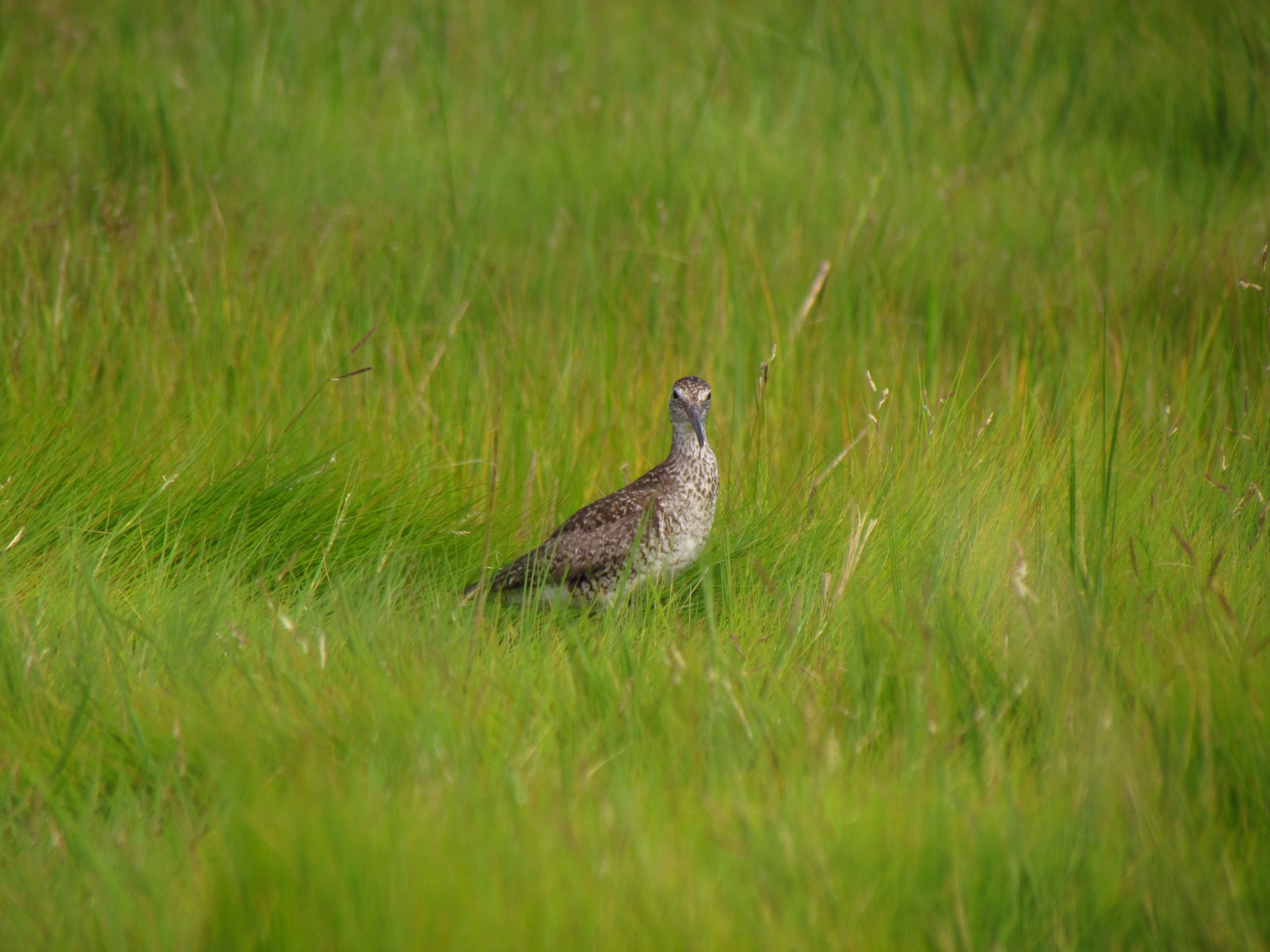
I head down through the Sneak and into Bailey Creek where I spot my first Willets of the day.  only a few of the Osprey are on their nests, and this is due more to convenience rather than need.  There are six in that tree, four in that tree, and three on the pilings by the dock in the bend.  It's Double Osprey season for sure. 
Laughing Gulls are perched along the section of the Neck River that is nearest to the sound. 

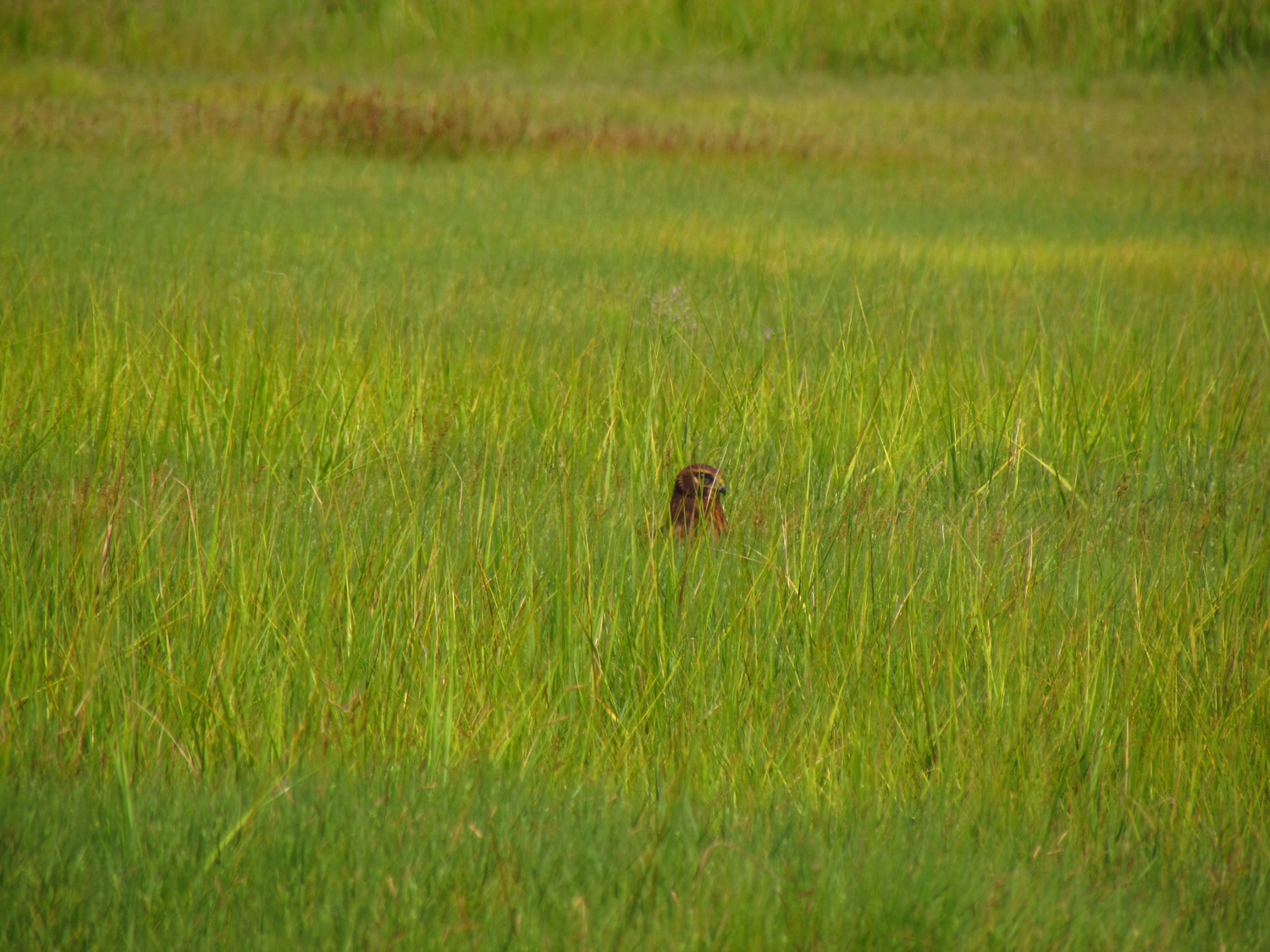
Harrier
I make my return up the East River, adding ten Willets.  As I near Cedar Island the corner of my eye catches a dark bird turning low over the spartina before disappearing.  I exit the canoe and take a few steps hoping to flush it.  A Harrier takes wing and flies a few yards before settling.  I haven't seen a Harrier since this spring.

Wednesday, August 8, 2018

The Season of Double Osprey


Laughing Gull
There are several Laughing Gulls in the lower stretch of the Neck river.  I Haven't seen them around until now and I seem to remember that they show up mid summer.  I don't know if they are migrating or just straying farther from nesting grounds.


I'm a third of a mile up the Neck River before I spot the first Willet.  I spot the 2nd Willet when I am halfway up Bailey Creek to the entrance of the Sneak.  I see no Willets in the Sneak, which is a first for this summer.  When I reenter the East River, Great Blue Herons are outnumbering Willets 4 to 2.

This is the Double Osprey Season.  Now that the young are all flying, if one was used to seeing ten Osprey, you would now be seeing twenty.  It happens in a short period of time, so it does get your attention if you are visiting the marsh on a regular basis.  There are six Osprey circling around near Cedar Island as I write.  There is a lot of whistling going on everywhere.  Osprey calls are usually a hoarse whistle.
Green Heron
I flush some Yellow-Legs and then resume paddling up the East River. 
The tall spartina is putting out its seed.
Above the highway bridge I start to see Kingfishers on occasion.  More of them now than earlier in the summer.  At the small cedar swamp just down from Foote Bridge I spot a pair of Green Herons.  On my way out I flush a third near the Duck Hole Farms and a fourth in the Big Bends.  The fourth one tries to be counted more than once, but I am wise to its hokum. 

When I take out I have a nice talk with a University of Connecticut researcher.  She has a small patch of ground marked out in the salt marsh where she counts, observes and tracks marsh birds.  I share some of my more anecdotal observations, which she finds interesting because she hasn't paddled up the river past her research plot.  She tells me that the Yellow-Legs nest farther north and they are here migrating through.  She thinks the Willets might have moved to the shore although there might be a few around that are either young or still have chicks to tend.

Friday, August 3, 2018

Bird Shift


I head up the East River near the bottom of the tide, getting an early start in order to beat the coming heat of the day.  The Osprey are not accommodating my desire of watching them fly.  The young are still not overly excited about testing their new skills and the adults are staying close to the nest where they can keep an eye on things.
At this tide my eyes are well below the top of the spartina marsh, but the exposed silt banks bring out the shore birds that feed on mud critters.  I pass a few rather sedate Willets and then when I get to the first bend at the railroad tracks I flush five Yellow-Legs.  This is a significant event as the Yellow-Legs disappear when the Willets arrive.  I don't know what the relationship (or bad relationship) is between them, but they don't seem to like being in the same area at the same time.

In the Big Bends, I spot a few more Yellow-Legs.  It has been several weeks since I've seen a Willet up here - there are usually just a few.  Either this area is undesirable for Willet nesting or the numbers of Willets hasn't required using the area, yet.  For good measure I flush a juvenile Night Heron from near the Rock Pile (actually an old tide control dam or man-made ford for crossing the river...or both).  It is probably a Black Crowned Night Heron, but I can't be sure.

Yellow-Legs
Not long after passing under the Stone Arch Bridge I flush two herons - an adult Black Crowned Night Heron and another juvenile.  These are also significant events...the Night Herons are moving farther away from their rookeries now that their young are flying.  I don't see them here earlier in the summer.

Juvenile Black Crowned Night Heron
I turn at the Duck Hole Farms as the water is running thin.  Just about then, a Great Blue Heron flies across the river right up to a Great Egret spreading its wings and letting out a long "skraaaawk" and startling the Egret.  I broke out laughing at Nature's version of a practical joke.  It took the Egret a short minute to compose itself. 

My bird observations on my return journey are pretty much a mirror image of my observations on the way up.

Wednesday, August 1, 2018

Skedaddle


While putting in I catch the sound of very distant thunder.  This is the low and long rumble that makes you pause and think about what it is that you are hearing, and you only hear it if you listening to the world around you.  As soon as I start moving it is imperceptible.   It is someone else's storm. It reminds of the sound that comes from a train freight yard, one that is a mile away when an engine connects to a long line of cars. It is an indistinct rumble that goes on for a long fraction of a minute as each car in turn bangs into the next.
I set out to check on the young Osprey, heading up the Neck River and then into Bailey Creek.  The storm clouds are to the west and look like they should sweep north and away from me.  Halfway into the Sneak I surprise five Willets.  One remains and scolds me for minutes.  I suspect it is the same Willet that followed me and S the other day.  It was an unusually determined bird. 

There is that determined Willet
When I look up from my camera I catch a flash of far off lightning in the corner of my eye.  It might have been a trick of the light, a sparkle of something, but then again it might have been lightning.  I turn around and head back.  There is no cover in the salt marsh - and I am the tallest object for hundreds of yards around me.  The clouds are no longer sweeping past but are slowly pushing over.  The deep rumble of distant thunder is exchanged for the distinct crackle of something much closer.  A sharp edged lightning bolt reaches down.  I count the seconds between the sight and the sound.  It's a couple miles off.  A light rain comes just as I reach the put-in.